$2 Million Settlement in Fatal Child Drowning Case at Florida Resort-Style Short-Term Rental Property
Lawsuit Raises Major Safety Questions for Vacation Rentals with Waterpark Amenities
The Haggard Law Firm’s Adam Finkel and Michael Haggard have settled a fatal drowning lawsuit involving the death of a child at a large “resort-style” short-term rental property in Clermont, Florida. The $2 Million policy limits settlement, draws attention to growing safety concerns surrounding vacation rentals that feature commercial-style aquatic attractions without corresponding safety protections.
The case, Juanita Davis-Ealy and Alexander Ealy, as Co-Personal Representatives of the Estate of Alexander Ealy, Jr. v. The Great Escape Lakeside, LLC, was filed in Lake County, Florida following the tragic drowning death of young Alexander “AJ” Ealy, Jr. on July 10, 2025.
Attorneys with The Haggard Law Firm and co-counsel argued that the property operated far beyond the scope of a traditional residential rental and instead functioned more like a hotel—requiring heightened water safety measures, including lifeguards or designated water watchers.
What Happened at The Great Escape Lakeside?
According to the lawsuit, the Ealy family was staying at The Great Escape Lakeside, a large-scale short-term rental property in Clermont, Florida marketed with extensive resort-style amenities, including:
- A lazy river
- High-speed water slide
- Waterpark-style recreational features
- The property promoted itself as a luxury vacation destination designed to compete with nearby Orlando-area resorts and hotels.
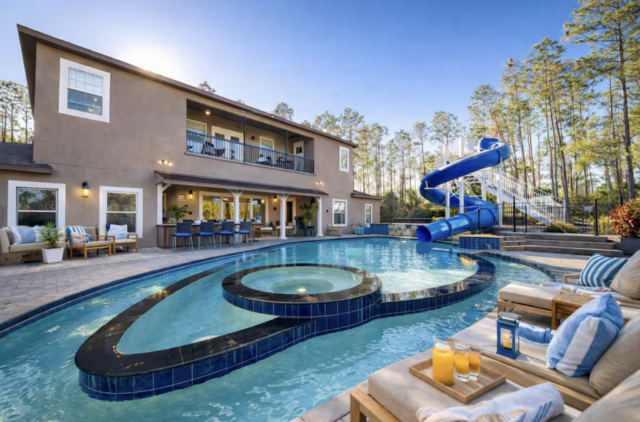
On July 10, 2025, while family members were using the aquatic amenities, AJ tragically drowned in the property’s pool. The lawsuit alleged that despite the foreseeable dangers associated with commercial-style aquatic attractions, the property failed to provide or require:
- Lifeguards
- Water watchers
- Adequate aquatic supervision
- Appropriate operational safety measures
Can a Short-Term Rental Be Held Liable for a Drowning?
Yes. Property owners and operators may be held legally responsible when dangerous conditions or inadequate safety measures contribute to a drowning incident.
In this case, the plaintiffs argued that the property’s size, design, marketing, and aquatic features created obligations similar to those imposed on hotels, resorts, and recreational aquatic facilities.
The legal team pointed to industry guidance and aquatic safety standards, including principles reflected in the Model Aquatic Health Code (MAHC), which emphasize the importance of supervision and risk management in aquatic environments.
The defense initially argued that the property was merely a residential home and therefore not legally required to provide lifeguards. However, plaintiffs maintained that the nature of the property’s operations and amenities created a heightened duty of care.
The case ultimately resolved for the full available insurance policy limits before mediation concluded.
Growing Legal Concerns for Resort-Style Vacation Rentals
The rise of large luxury vacation rentals across Florida and the United States has created new legal and safety challenges. Many short-term rentals now include amenities traditionally associated with hotels and resorts, such as:
- Lazy rivers
- Water slides
- Multiple pools
- Sports courts
- Commercial playgrounds
- Large guest capacities
However, many of these properties are still classified and regulated as residential homes rather than commercial hospitality properties.This creates a significant safety gap.
Key Questions Raised by This Case Include:
- When does a vacation rental become functionally equivalent to a resort?
- Should resort-style STRs be required to provide lifeguards or aquatic supervision?
- What safety standards apply to commercial-scale aquatic amenities?
- Are current insurance coverages sufficient for catastrophic injury and wrongful death claims?
As the short-term rental industry continues to evolve, courts and juries are increasingly evaluating these properties based on how they operate and market themselves—not simply how they are labeled.

Drowning Prevention and Water Safety Awareness
The tragedy comes as Florida continues to lead the nation in child drowning incidents.
According to drowning prevention organizations:
- Drowning is a leading cause of accidental death for young children
- Many drowning incidents occur silently and within seconds
- Resort pools and vacation environments can increase distractions for caregivers
- Layered safety protections save lives
During National Water Safety Month, The Haggard Law Firm continues its commitment to drowning prevention advocacy and accountability for unsafe aquatic environments.
The Haggard Law Firm’s Commitment to Drowning Prevention
For decades, The Haggard Law Firm has represented families affected by preventable drownings and aquatic negligence cases throughout Florida and across the country.
Our attorneys work to hold negligent property owners, resorts, hotels, vacation rental operators, and aquatic facilities accountable when safety failures lead to tragedy.
If your family has been affected by a drowning or serious aquatic injury, our legal team is available to review your case.